
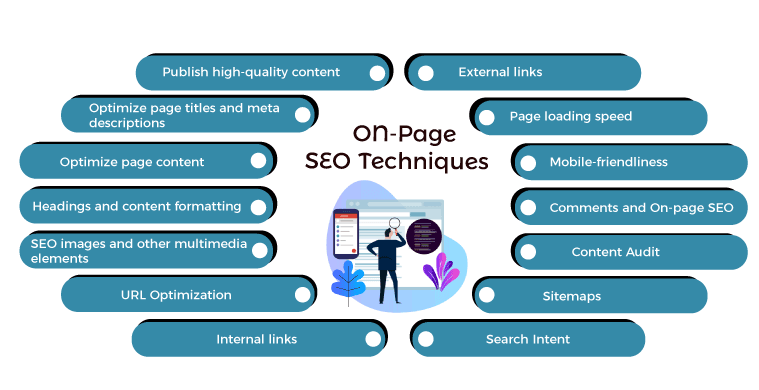
Effective On-Page SEO Techniques to Boost Your Website’s Rankings. Unlock your website’s potential with Effective On-Page SEO Techniques. Boost your rankings & drive traffic using simple, proven methods!

<<<<< Buy Now from Official offer >>>>>
Keyword Research & Optimization
Keyword research forms the cornerstone of Effective On-Page SEO Techniques to Boost Your Website’s Rankings. It involves finding the right keywords that your audience uses in searches. Begin by identifying keywords that match your content. Utilize tools like Google Keyword Planner or SEMrush to find relevant terms. Pay attention to search volume & competition. Long-tail keywords often yield better results due to their specificity.
Create a list of primary & secondary keywords. Primaries should have higher search volume, while secondaries can have lower competition. Use these keywords naturally throughout your content, titles, & heading tags. Remember, keyword stuffing is harmful. It can lead to penalties from search engines. Ensure readability remains a priority. Use keyword variations to capture a broader audience.
Keep in mind that user intent is crucial. Identify what users want to know. Tailor your content to meet those needs. This approach improves user engagement & lowers bounce rates, positively impacting rankings. Lastly, consider local SEO keywords if applicable. They help target specific audiences based on geography.
Optimizing Title Tags
Title tags are essential for Effective On-Page SEO Techniques to Boost Your Website’s Rankings. They inform search engines about page content. Each page should have a unique title tag. Include primary keywords towards the beginning. Aim for under 60 characters. This ensures the title displays fully in search results.
Make the title engaging. A good title encourages clicks. Use numbers or enticing words to draw attention. For example, instead of a generic title like “SEO Techniques,” use “10 Proven SEO Techniques for 2023.” This strategy makes the title more appealing to users.
Don’t forget branding. Include your brand name if it fits. This increases brand recognition. Monitoring click-through rates (CTRs) can indicate how well your titles perform. Adjust them based on data to enhance effectiveness. Remember, the title is often the first impression. Ensure it’s impactful.
Meta Descriptions & Their Importance
Meta descriptions are another crucial element in Effective On-Page SEO Techniques to Boost Your Website’s Rankings. They summarize your content for search engine users. Each webpage should have a meta description. Keep it between 150 & 160 characters. Include primary keywords. This enhances visibility in search results.
Make your meta description compelling. Use active voice & a call to action. For instance, “Discover effective tips for ranking higher!” Engage readers to click through to your website. Often, a well-crafted meta description can significantly improve your CTR.
Monitor performance. Tools like Google Search Console can show how often your meta description appears in searches. If it performs poorly, consider updating it. Experiment with different wording or structures. Remember, the meta description plays a significant role in user engagement.
Header Tags Structuring
Header tags play a critical role in Effective On-Page SEO Techniques to Boost Your Website’s Rankings. These tags help structure your content logically. They range from H1 to H6, with H1 being the most important. Use H1 for your main title, & ensure it includes your primary keyword.
Subsequent headers (H2, H3) should outline sections & subsections. This practice improves readability for users & search engines. It allows for easier scanning of content. On top of that, it enhances your chances of ranking for related keywords.
Maintain a hierarchy when using header tags. Use H2 for main topics & H3 for subsections. This helps in organizing information efficiently. When users find it easy to read, they are more likely to stay on your page, reducing bounce rates.
Image Optimization Techniques
Images are significant for Effective On-Page SEO Techniques to Boost Your Website’s Rankings. Be that as it may, they need optimization. Start by compressing images to enhance loading speed. Tools like TinyPNG or JPEGmini can greatly reduce file sizes without losing quality.
Use descriptive, keyword-rich file names. For example, instead of “image1.jpg”, use “red-shoes-summer.jpg”. This helps search engines understand your image content. Always include alt text. The alt attribute describes the image & should include relevant keywords. This is crucial for accessibility & improves SEO.
Finally, consider adding captions where appropriate. Captions can engage more users & offer context. Overall, optimized images can help enhance your site’s authority & boost rankings.
Content Quality & Relevance
Creating quality content is vital for Effective On-Page SEO Techniques to Boost Your Website’s Rankings. Your content should address what users seek. Focus on providing in-depth, valuable information. Aim for a minimum of 1000 words when possible to cover topics thoroughly.
Ensure the content is original & useful. Plagiarized content can harm your site’s standing. Use clear & concise language. Short paragraphs & bullet points improve readability. Integrating multimedia, like videos or infographics, can also enhance user engagement.
Regularly update content to keep it fresh. Check analytics to see what users engage with. Then refine or expand those sections. Including a mix of content types can help retain user interest over time.
Internal Linking Structure
Internal links are important for Effective On-Page SEO Techniques to Boost Your Website’s Rankings. They connect your content & guide users through your site. Create a logical internal linking structure. This helps distribute page authority & boosts rankings.
When creating links, use descriptive anchor text. It should indicate the linked content’s subject matter. Avoid generic terms like “click here.” Instead, use relevant keywords or phrases. This strategy informs search engines & users about the linked page.
A well-structured internal linking system enhances user experience. It encourages visitors to stay longer on your site. Ultimately, it may lead to higher conversion rates by guiding the audience toward relevant content. Regularly audit your internal links. Update broken or outdated links to maintain site integrity.
Mobile Optimization Techniques
Considering mobile optimization is crucial in Effective On-Page SEO Techniques to Boost Your Website’s Rankings. More users access content via mobile devices today. A mobile-friendly design improves user experience. Use responsive design to ensure consistency across devices.
Test your website with tools like Google’s Mobile-Friendly Test. They analyze & offer insights into mobile usability. Focus on loading speed. Tools such as GTmetrix can help evaluate your page speed performance. If load times are slow, optimize your images & scripts.
Ensure easy navigation on mobile. Use a simple menu structure. Touch elements should be large enough for easy tapping. On top of that, clear calls to action ensure mobile users can easily engage. An optimized mobile site can improve CTR & overall rankings.
User Engagement Metrics
User engagement is an essential metric for Effective On-Page SEO Techniques to Boost Your Website’s Rankings. Search engines assess how users interact with your site. High bounce rates may indicate poor content or UX. Aim for longer session durations & more page views.
To boost engagement, enhance your content’s relevance. Use targeted keywords while providing true value. Add interactive elements like surveys, quizzes, or comment sections. Engaging interactive content encourages users to spend more time on your site.
Collect feedback from visitors. This could be through feedback forms or social media. Use this information to refine your content strategy. Always prioritize user satisfaction, as happy visitors are more likely to return.
Monitoring & Analytics
Finally, continuous monitoring is vital for Effective On-Page SEO Techniques to Boost Your Website’s Rankings. Utilize analytics tools like Google Analytics. They provide insights into traffic, user behavior, & source of visitors. Regularly monitor data to identify trends or issues.
Pay attention to which pages perform well & which don’t. This information can guide your content creation & optimization efforts. Set up Google Search Console to monitor indexing status & visibility. It helps you understand how search engines view your site.
Use this data to adjust your strategies as needed. SEO is an ongoing process. Regular reviews ensure you stay on top of any changes in user behavior or search engine algorithms.
“Successful SEO is all about paying attention to details.” – Bettie Spinka Sr.
My Personal Experience with On-Page SEO Techniques
My experience involves employing Effective On-Page SEO Techniques to Boost Your Website’s Rankings. Initially, I struggled with traffic. So, I researched keyword optimization. I implemented structured headers & comprehensive content. Gradually, I saw improvements. My website’s traffic increased significantly.
<<<<< Buy Now from Official offer >>>>>

Features of Squirrly SEO
Squirrly SEO offers a range of features designed to improve your website’s visibility & rankings in search engines. Below is a comprehensive breakdown:
- Lifetime Access: Purchase provides access for a lifetime.
- Future Business Plan Updates: Users receive updates when the plan changes.
- Redemption Code Validity: Codes must be redeemed within 60 days after purchase.
- Stackable Codes: Users can stack up to 10 codes for enhanced features.
- GDPR Compliant: Aligns with GDPR regulations for user privacy.
- Eligibility: Available for new users & returning AppSumo As well as purchasers.
- Leadership in Rankings: Access to a leaderboard showcasing top-ranking pages.
- Unlimited Page Analytics: Detailed content marketing analytics available for all pages.
- SEO Live Assistant: Provides unlimited content optimizations with real-time guidance.
- Google Rank Check: Perform unlimited checks through Google Search Console.
- SEO Strategy Development: Offers insights for a sound SEO strategy.
- Pro SEO Live Assistant: Advanced support for SEO needs in real-time.
- Copyright-Free Images: Access to images without copyright issues.
- Blogging Assistant: Tools to enhance blog content creation & auditing.
- Pro Audit Suite: Comprehensive audit tools for thorough reviews of content.
- Duplicate Meta Audits: Identify & resolve duplicate meta tags quickly.
- On-Demand SEO Audits: Immediate audits for timely SEO improvements.
- Business SERP Checker: Insights into business search engine results.
- Keyword Optimization: Identifies keywords you can effectively rank for.
Challenges of Squirrly SEO
Despite the many benefits offered by Squirrly SEO, users encounter challenges. One common issue involves limitations in specific features. New users might find some functionality overwhelming, leading to a steep learning curve.
Compatibility issues often arise with certain themes or plugins. Users have reported difficulties integrating Squirrly with their existing setups. Feedback from some users points to a need for improved compatibility.
And another thing, users have mentioned a lack of comprehensive documentation. While Squirrly provides support, having more tutorials & guides can enhance user experience. A potential solution is to utilize community forums for better understanding.
Price of Squirrly SEO
Pricing for Squirrly SEO is structured for flexibility. Here are the available plans:
| Plan Type | Price |
|---|---|
| Single | $99 |
| Double | $198 |
| Multiple | $297 |
Limitations of Squirrly SEO
Squirrly SEO does possess some limitations. While it offers many capabilities, it may fall short compared to other products. One area of concern is user experience; some features may feel cluttered or confusing.
Another limitation lies in reporting features. While Squirrly provides analytics, deeper insights could enhance user understanding. Comprehensive reporting has emerged as a common request from users.
And don’t forget, Squirrly may lack certain advanced features found in competing tools. This might not meet the needs of experienced SEO professionals who require more intricate tools for their strategies.
Case Studies
Numerous users have shared their success stories with Squirrly SEO. One such case involved a blog that increased its organic traffic by 120% within six months. Utilizing the SEO Live Assistant proved beneficial for optimizing existing content regularly.
In another instance, an e-commerce site leveraged the keyword optimization features. This resulted in a 50% rise in product visibility on search engines, leading to increased sales. Insights from the SEO strategy tool helped prioritize high-value keywords.
Feedback from a freelance writer highlights improved blogging performance thanks to the blogging assistant. This user navigated content audits effectively, which streamlined content production & improved posting frequency.
Recommendations for Squirrly SEO
Maximizing the potential of Squirrly SEO involves adopting some best practices. First, users should engage thoroughly with the SEO Live Assistant to optimize newly created content continually. Real-time suggestions enhance the visibility of pages.
It’s advisable to regularly check the analytics features. This helps users understand which pages drive the most traffic & which keywords perform best. Metrics inform future content strategies.
Lastly, consider integrating other tools alongside Squirrly SEO. Complementing the service with a content management system (CMS) that offers rich media can further enrich content & performance.
SEO Techniques for On-Page Optimization
Implementing effective on-page optimization is crucial for boosting your website’s rankings. Below are several essential strategies:
- Keyword Research
- Meta Tags Optimization
- Header Tags Structure
- Image Optimization
- Internal Linking
Importance of Keyword Research
Keyword research forms the backbone of any successful SEO strategy. Identifying relevant keywords will ensure that content aligns with what users search for. Tools within Squirrly SEO can assist in discovering keywords that have high potential for ranking.
Focusing on long-tail keywords often yields better results. These keywords face less competition, making them easier to rank for. And another thing, incorporating variations of primary keywords throughout the content enhances relevance.
Regularly revisiting keyword strategies allows for adjustment based on trends or shifts in user behavior. Staying informed ensures your content remains competitively ranked within search engine results.
Meta Tags Optimization
Optimizing meta tags significantly impacts click-through rates (CTR). The title tag & meta description are crucial for search visibility. Utilize relevant keywords within these tags to enhance SEO effectively.
Squirrly SEO facilitates this process by suggesting optimized meta tags based on content. The right combination can draw more traffic to your site. Regularly analyzing & updating these tags is also essential as keywords & trends evolve.
A/B testing different meta tags can provide insights into what resonates best with the audience. Search engines frequently adjust their algorithms, so remaining proactive is crucial for optimal performance.
Header Tags Structure
Utilizing header tags correctly enhances content readability & understanding. Using H1 for the main title, followed by H2 for major sections, aids both users & search engines in navigating the content.
Incorporate relevant keywords within these tags. This practice not only helps with SEO but also informs readers about the content’s structure. Consistency in header tag usage across pages will create a user-friendly interface.
Consider breaking lengthy content into smaller sections using header tags. This enhances the reader’s experience & allows for a smoother navigation, especially on mobile devices.
Image Optimization
Images enrich content, but they require optimization for better loading times & SEO. Compress images without sacrificing quality. Properly sized images improve page speed, an essential ranking factor.
Using descriptive filenames & alt text ensures that search engines understand the context of images. This can also attract traffic through image-based search results.
Leverage tools within Squirrly SEO for performance analysis. Identify images that may need adjustments or optimizations based on user engagement metrics.
Internal Linking
Internal links play a vital role in enhancing site structure. These links guide users through related content while establishing contextual relevance for search engines. A well-structured internal linking strategy contributes to improved rankings.
Using relevant anchor text helps streamline the process. Ensure that content naturally flows between different pages. This encourages users to explore more of what your website offers.
Regularly audit internal links to remove any broken or outdated links. Maintaining a clean linking structure may enhance user experience & retain visitors longer.
SEO Analytics & Performance Monitoring
Monitoring website performance is essential for ongoing SEO success. Utilizing tools like Squirrly SEO allows users to track relevant metrics effectively.
Set clear goals & KPIs that align with your content strategy. Regularly review data to identify areas for improvement & refine your approach. This could include analyzing which content types perform best & which keywords result in traffic.
Evaluate competitor analytics. Understanding how competitors rank & which strategies they employ can provide valuable insights. Performance monitoring aids in adjusting methods for better rankings steadily.
Content Quality & User Experience
Creating high-quality content that caters to user intent is vital. Strive for clarity, value, & engagement in every piece you publish. Engaging content keeps visitors on your site longer, signaling to search engines that the page is valuable.
Regularly updating content helps maintain freshness. Go back to older articles & add new information or insights. This shows search engines that your site is active & relevant.
Incorporate elements such as bullet points, lists, & images to break up text. This approach creates a readable format that enhances overall user experience.
Utilizing Social Media for SEO
Social media presence plays a crucial role in SEO. Sharing content on various platforms enhances visibility & can drive traffic back to your site. Engaging with audiences on social channels strengthens brand presence.
Utilize social media for link building opportunities. Encouraging shares & promoting high-quality content can lead back to your website, which benefits SEO.
Engagement metrics from social platforms can provide insights into content popularity. Use this data to refine your content strategies & explore new opportunities for audience engagement.
Effective Use of Long-Tail Keywords
Long-tail keywords serve as a powerful strategy in on-page SEO. These keywords often exhibit lower competition & higher conversion rates due to their specificity. Tailoring content around long-tail keywords can attract a more targeted audience.
Incorporate these keywords naturally throughout the content. Maintaining a balance ensures that the content remains engaging & adheres to SEO best practices.
Monitor the performance of long-tail keywords regularly. Adjust strategies based on measured effectiveness to maintain or improve rankings.
Building Quality Backlinks
Backlinks from reputable sources are beneficial to SEO. Focus on creating shareable & valuable content that naturally attracts links. Guest blogging & collaborations can provide avenues for backlink generation.
Utilizing tools such as Squirrly SEO aids users in identifying potential sites for backlinks. Regularly review your backlink profile for quality & identify areas for improvement.
Implement outreach strategies to connect with other websites or bloggers. Building a network can facilitate backlinks that enhance domain authority & improve SEO performance.
Adapting to Search Engine Updates
Search engine algorithms evolve consistently, impacting SEO strategies. Staying informed about updates through industry news & resources enables users to adapt quickly.
Squirrly SEO helps users monitor changes that affect their sites. Understanding these shifts & adapting practices accordingly ensures ongoing effectiveness.
Strategies should evolve alongside changes in user behavior & engagement. Regularly assessing the effectiveness of your SEO efforts allows for timely adjustments.

What are on-page SEO techniques?
On-page SEO techniques refer to the strategies used to optimize individual web pages to rank higher & earn more relevant traffic in search engines. This includes optimizing content, improving HTML elements, & enhancing the overall user experience.
How does keyword optimization affect on-page SEO?
Keyword optimization is crucial as it helps search engines understand the topic & relevance of your content. Using targeted & relevant keywords in strategic locations such as titles, headings, & throughout the content can significantly improve search engine rankings.
What role does content quality play in on-page SEO?
High-quality content is vital for on-page SEO. It should be informative, engaging, & provide value to readers. Quality content not only attracts visitors but also encourages them to stay longer, reducing the bounce rate & signaling search engines to rank the page higher.
How can I use headings to improve my on-page SEO?
Using headings (H1, H2, H3, etc.) helps structure your content & makes it easier for readers & search engines to navigate. The H1 tag should contain the main topic, while H2 & H3 tags can outline subtopics, enhancing readability & relevance for search engines.
What is the importance of meta tags in on-page SEO?
Meta tags, such as the title tag & meta description, provide information about the content of a page to search engines & users. A well-crafted title & description can improve click-through rates & encourage users to visit your website.
How does image optimization contribute to on-page SEO?
Image optimization enhances website loading speed & improves user experience. It involves using appropriate file formats, compressing images, & adding descriptive alt text, which aids in accessibility & helps search engines index images better.
What is the significance of internal linking for on-page SEO?
Internal linking improves website navigation & helps distribute page authority across your site. It allows search engines to crawl your website more effectively & helps users find related content, increasing the time spent on your site.
How does mobile optimization affect on-page SEO?
Mobile optimization is essential as a significant portion of users access websites from mobile devices. A mobile-responsive design improves user experience, which search engines consider when determining rankings.
Can page loading speed impact on-page SEO?
Yes, page loading speed is a critical factor that affects user experience & search rankings. Slow-loading pages can lead to higher bounce rates, while fast-loading pages are favored by search engines & provide a better user experience.
What is schema markup & how does it enhance on-page SEO?
Schema markup is a type of microdata that helps search engines understand the content of your page better. Implementing schema can lead to rich snippets in search results, improving visibility & potentially increasing click-through rates.
How can I improve the user experience on my website for better on-page SEO?
Improving user experience can be achieved by enhancing site navigation, ensuring fast loading times, using a clear layout, & providing valuable content. A positive user experience encourages visitors to stay longer, which can boost rankings.
What are the benefits of using a clean URL structure?
A clean URL structure enhances usability & allows search engines to crawl pages more efficiently. URLs should be descriptive, concise, & include relevant keywords, making them more understandable for both users & search engines.
<<<<< Buy Now from Official offer >>>>>
Conclusion
In summary, applying Effective On-Page SEO Techniques to Boost Your Website’s Rankings is key to achieving online success. By focusing on elements like title tags, meta descriptions, & keyword placement, you can significantly improve your site’s visibility. Don’t forget about content quality engaging, relevant content helps keep visitors on your page. And another thing, optimizing images & ensuring fast load times enhances user experience. Remember, the goal is to make your site friendly for both search engines & users. With these simple yet powerful strategies, you’re well on your way to climbing the search engine ladder & attracting more visitors.
<<<<< Buy Now from Official offer >>>>>
Leave a Reply
You must be logged in to post a comment.